
Nfld. & Labrador
Fighting climate change is the goal, says CEO Joshua Green of a company that makes smart thermostats

Terri Coles · CBC News · Posted: Nov 18, 2019 6:00 AM NT | Last Updated: November 18, 2019
Natasha Reid and Joshua Green stand at Mysa’s headquarters in St. John’s. (Ted Blades/CBC)
9 comments
Becoming the first carbon-neutral company in Newfoundland and Labrador sounds like an
ambitious undertaking, but Mysa co-founder Joshua Green says it was actually pretty simple —
and considering that his company’s core purpose is to fight climate change, it just made sense to
do it.
“It’s about showing leadership,” said Green, the company’s CEO.
“We know that this is the right thing to do ethically and socially, and we want to be a leader in
setting an example of what we believe that companies should be doing.”
The proof is in the plaque on a wall at the two-floor headquarters of the company, which sells
the smart thermostats designed for baseboard and in-floor electric heating.
The plaque marks the company’s carbon-neutral status for 2018 alongside a picture of the
Appleton-Glenwood Wastewater Treatment Facility, the facility that generated the carbon credits
that got Mysa to its neutral status.
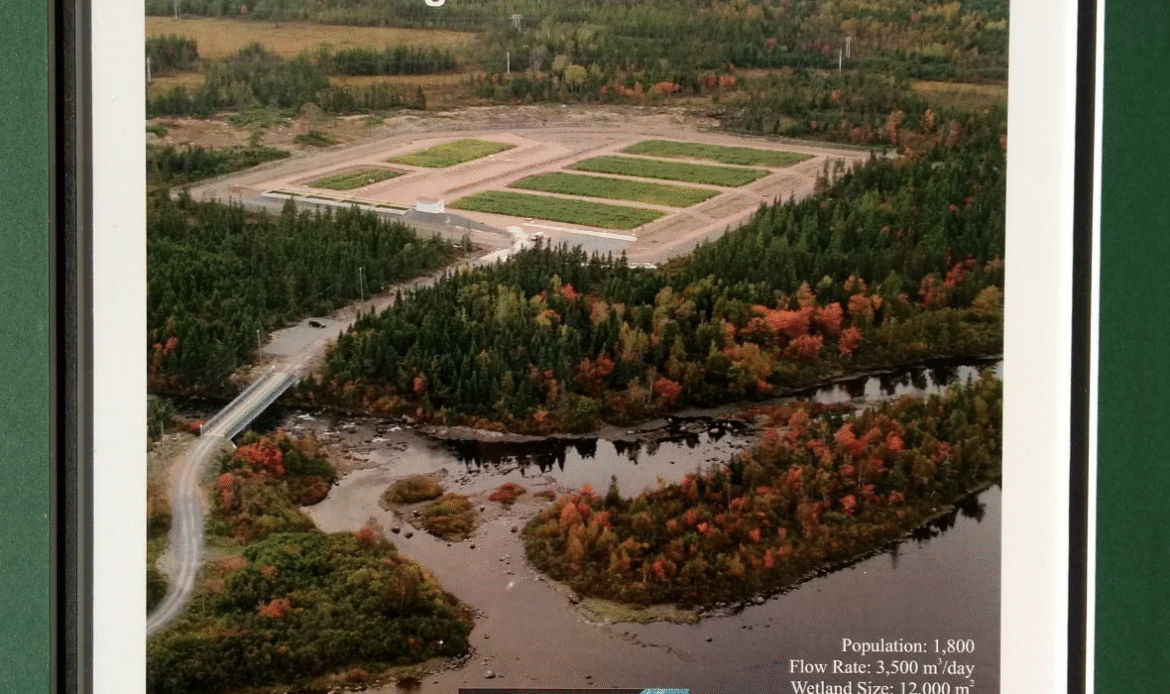
The treatment plant generates carbon credits, which Mysa purchases through Sharp
Management, which is also based in Newfoundland and Labrador.
What are carbon credits?
Simply put, carbon credits — also referred to as carbon offsets — are credits given for one
party’s reductions in greenhouse gas emissions that can be purchased to offset the emissions of
another party. The credits are usually measured in tonnes of CO2-equivalents.
The carbon credits sold by Sharp Management are generated by the wastewater treatment
facilities in Appleton-Glenwood and Stephenville. Those facilities generate credits through the
reduced emissions of the engineered wetlands used for wastewater treatment.
There’s a reason tech startups are launching from Memorial University, as new
award shows
Verafin’s quiet, huge success: Canada’s largest venture funding deal goes to an N.L.
company
Mysa then purchases some of the credits generated by the treatment facilities, through Sharp
Consulting, in order to offset the emissions their company produces through various business
activities: flights to and from meetings, commutes to and from work, electricity use at their
office.
“All of the money that we use to purchase these stays right here in Newfoundland and beyond
that, 50 per cent of it actually goes to the municipalities that actually partnered to generate
these carbon credits,” Green said.
Calculating those credits for each year can be done in an afternoon. Using a spreadsheet, they
work out the numbers for every employee’s commute, every flight, all the electricity used, and
other carbon-producing activities.
“Through that we’re able to generate how much carbon we’ve released into the atmosphere over
the year,” said Natasha Reid, Mysa’s utility relations manager.
Behave, then buy
Before carbon credits for emissions are calculated, however, the company does all it can to get
those emissions as low as possible. That involves initiatives like reducing energy use and
diverting waste to composting and recycling. Those efforts have gotten emissions down by about
20 per cent, Green estimated.
Mysa also gets its employees involved through monthly challenges. In September, for example,
the company’s 54 employees were challenged to reduce the emissions of their commutes to
work. The next month they collected clothing donations for the Gathering Place and held a used
clothing swap at the office.
It’s a win for the environment
and it’s a win fifinancially as well.
– Josh Green
“Textile waste and fast fashion is one of the most polluting industries in the world when it comes
to toxic chemicals and water pollution,” Reid said.
Doing that work to reduce emissions first, then offset them, is the right move for the
environment but it also makes sense from a business perspective, Green said.
“It actually incentivizes us from a financial point of view to reduce our emissions so that we have
to buy less offsets,” he said.
“So it’s a win for the environment and it’s a win financially as well, when we first reduce.”
Mysa may have been the first company in the province to go carbon-neutral, but they’re no
longer the only one. Aker Solutions Canada announced it was also carbon-neutral earlier this
year, and at a recent conference another company expressed their desire to do the same, Reid
said.
“It’s very inspiring, actually, to see how other people react,” she said.
“The reality is you don’t need a few people doing zero waste perfectly, you just need millions of
people doing what they can.”
Read more from CBC Newfoundland and Labrador
With files from On The Go
CBC’s Journalistic Standards and Practices | About CBC News
Report Typo or Error
RELATED STORIES
There’s a reason tech startups are launching from Memorial University, as new
award shows
Verafin’s quiet, huge success