Municipal Wastewater Solutions
Municipalities need practical, affordable solutions for managing wastewater. Large or small, WTS has a lower-cost green solution for your town’s wastewater treatment.
Large or Small, WTS has a lower cost green solution for your town’s wastewater treatment. Municipalities need practical, affordable solutions for managing wastewater. Large or Small, WTS has a lower cost green solution for your town’s wastewater treatment.
With many municipalities facing limited tax bases, aging populations and significant infrastructure demands, simply adopting conventional mechanical treatment systems may not always provide the most sustainable or affordable long-term solution. Wastewater planning should therefore not consider capital cost, but rather lifecycle operating costs, energy consumption, maintenance requirements, greenhouse-gas emissions, sludge management and the ability of the municipality to operate the system over its full-service life.
We offer municipalities award-winning, innovative, green and sustainable wastewater and sludge solutions to treat wastewater, drastically reducing the carbon municipalities use to treat their sewage, with the lowest life-cycle costs available. These engineered wetlands require no electricity, no chemicals, and no moving parts. Engineered wetlands offer effective treatment, reduced dependence on complex mechanical infrastructure, lower energy and chemical requirements, lower operating costs, and a smaller environmental footprint.
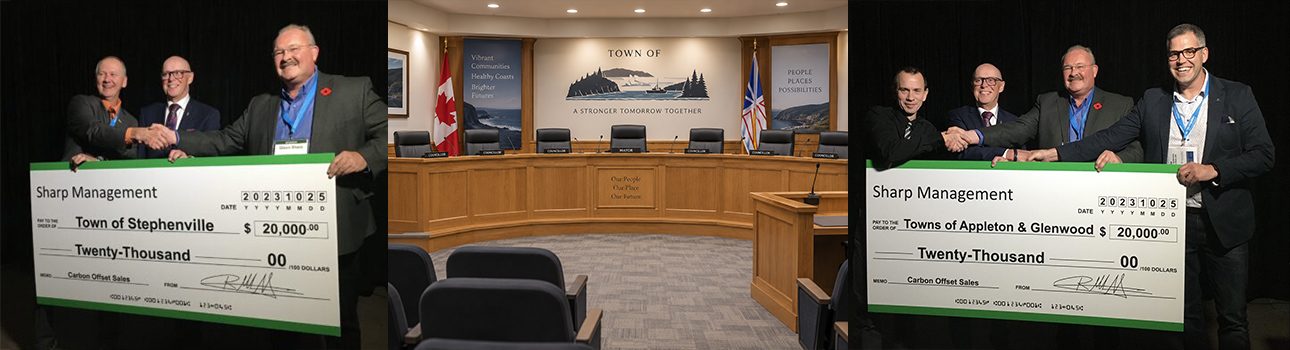
Not only are our Engineered Wetlands environmentally sustainable, but they have also become generators of income for municipalities. Depending on the size of the Engineered Wetland and the carbon it displaces, we can quantify and certify carbon offsets, which can be sold to polluters to reduce their carbon footprint.
Build Substainably!
Sludge & Biosolid Solutions
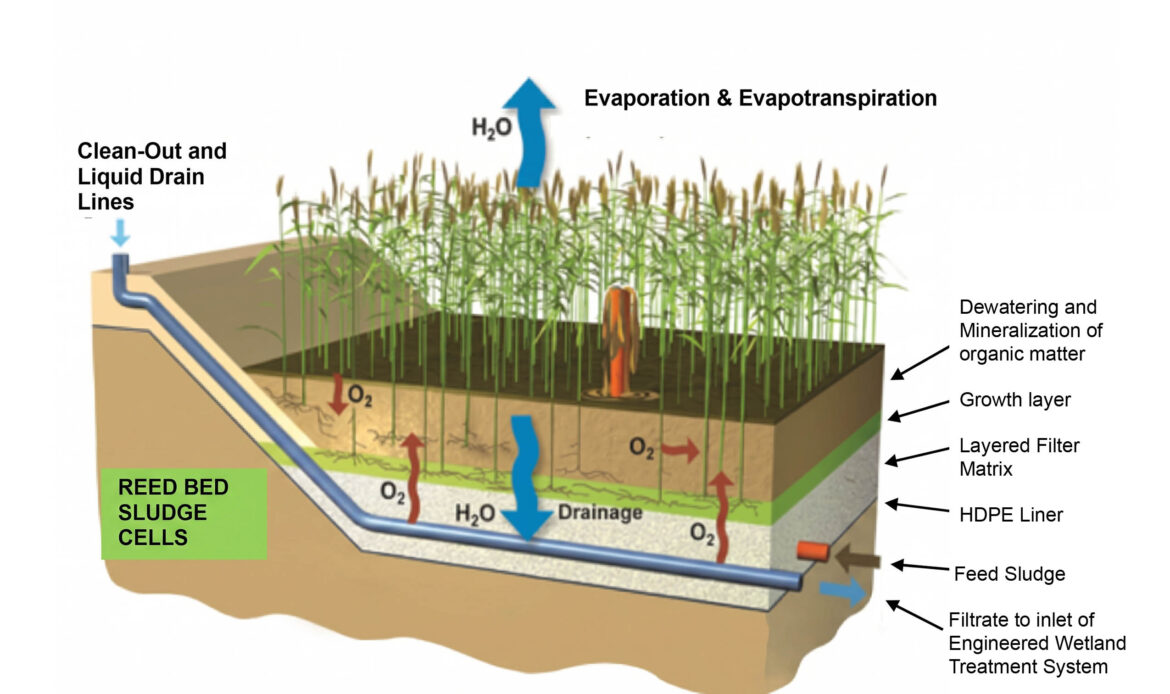
Municipalities need practical, affordable solutions for managing wastewater sludge. Conventional sludge handling, hauling, and disposal can create significant and recurring operating costs, particularly for smaller communities with limited budgets. Municipal Wetland Sludge Cells can turn sludge management from an ongoing financial burden into a more manageable part of municipal wastewater infrastructure with sustainable treatment. Municipalities can treat their own sludge, eliminating truck hauling costs and long-term disposal costs.
Commissioned in 2011, the approximately 4,000 m2 vertical-flow engineered wetland was designed specifically to provide treatment of landfill leachate, with a particular focus on reducing nitrogen and ammonia.
Municipal Sludge Treatment
Implementing an engineered wetland system—like the Wetland Sludge Cells technology—can transform decentralized septage management from a major cost center into a sustainable revenue generator for municipalities.
Municipalities need practical, affordable solutions for managing wastewater sludge. Conventional sludge handling, hauling, and disposal can create significant and recurring operating costs, particularly for smaller communities with limited budgets. Municipal Wetland Sludge Cells can turn sludge management from an ongoing financial burden into a more manageable part of municipal wastewater infrastructure with sustainable treatment. Municipalities can treat their own sludge eliminating truck hauling costs and long-term disposal costs.
Wetland Sludge Cells are part of a technology that was originally developed in Germany by Professor Reinhold Kickuth. With 35 patents and over 150 published scientific papers, he has contributed to the design and operation of over 1,000 sludge treatment systems around the world.
- Our Engineered Wetlands are not only environmentally sustainable, but they have also become income generators for municipalities. Depending on the size of the Engineered Wetland and the carbon it displaces, we can quantify for carbon offsets which can be sold to polluters to reduce their carbon footprint.
- Many Newfoundland and Labrador municipalities must upgrade wastewater systems to meet federal Wastewater Systems Effluent Regulations (WSER), with key compliance deadlines approaching in 2030 and 2040.
- For smaller communities, the challenge is not simply achieving compliance—it is choosing infrastructure they can afford to operate and maintain for decades.
- Upcoming wastewater feasibility studies should therefore evaluate engineered wetlands alongside conventional mechanical treatment systems. The objective should not simply be to meet WSER compliance, but to select treatment solutions that communities can realistically afford to build, operate and maintain for generations.
If you would like to learn more about implementing an engineered wetland system in your municipality, contact us. We look forward to hearing from you.
Operational & Direct Cost Savings
Elimination of Energy & Mechanical Maintenance Costs
Passive wetland cells operate naturally without electricity or heavy machinery, drastically reducing ongoing operational expenses.
Treat your own sludge & eliminate tranpostation and disposal costs
For communities relying on decentralized septic tanks or hauling operators rather than piped sewer networks, central receiving wetland cells accept haulage truck loads directly. The evapotranspiration and drainage processes reduce applied sludge volume by up to 10-fold. Less volume directly lowers the frequency and expense of hauling and transportation.